
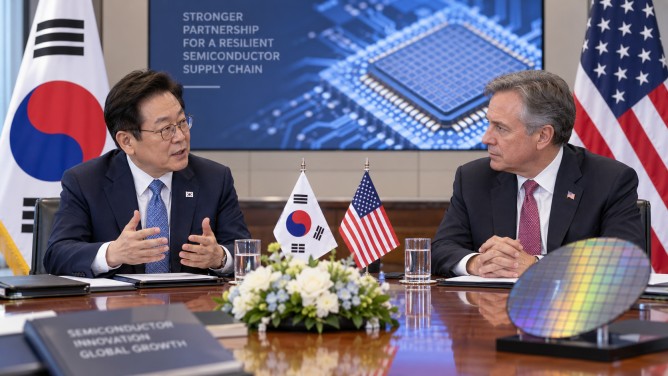
As South Korea and the United States engage in negotiations over semiconductor investments, the focus is on enhancing production capabilities within the U.S. These talks are part of broader discussions amid Washington’s contemplation of new tariffs on semiconductor imports. U.S. officials have signaled that companies may encounter increased costs unless they ramp up semiconductor production domestically.
Last year, South Korea agreed to substantial manufacturing investments in the United States, totaling $350 billion. This agreement includes provisions ensuring that South Korean chipmakers benefit from tariff rates that are at least as favorable as those extended to other major semiconductor trading partners. This move is crucial as the U.S. seeks to bolster its semiconductor manufacturing amid global supply chain challenges.
South Korea is a significant player in the global semiconductor industry, home to giants like Samsung Electronics and SK Hynix. These companies are leaders in memory chip production, a sector experiencing heightened demand due to the rapid expansion of artificial intelligence infrastructure by technology firms. The potential for increased tariffs has brought the importance of these discussions to the forefront, as it could significantly impact these companies’ operations and strategies.
In addition to semiconductor talks, South Korea and the U.S. are also engaged in negotiations on national security matters. One of the key issues in this area is Seoul’s ambition to develop a nuclear-powered submarine. However, according to a South Korean presidential official, progress in these talks has been limited, indicating challenges in aligning the two nations’ strategic and security objectives.