
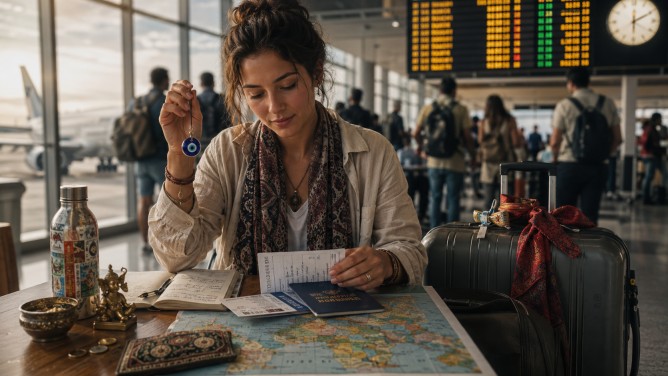
Embarking on a journey is often an experience steeped in anticipation and enriched by age-old customs and rituals that add a unique charm to the adventure. Across various cultures, travelers have cultivated intriguing superstitions intended to usher in good fortune and ward off misfortune while on the road. These practices, although lacking scientific validation, continue to thrive as part of the global travel tapestry.
One such tradition in the Balkans involves carrying a clove of garlic for protection against negative forces and the evil eye. Travelers tuck a clove into their luggage, trusting its power to shield them from bad luck. Meanwhile, a common ritual observed by some flyers is to touch or tap the aircraft’s exterior before boarding. This act, believed to attract good luck, often doubles as a calming ritual for those uneasy about flying.
In a similar vein, stepping onto an aircraft with the right foot is more than a figurative expression. For many, it’s a literal practice deemed to invite good fortune at the start of a journey. In the Middle East and the Balkans, families often engage in the tradition of pouring or sprinkling water behind a departing traveler. The flowing water is symbolic of a smooth and safe journey, carrying the hope of a safe return.
Numbers, too, hold significant sway in travel superstitions worldwide. While the number 13 is notoriously avoided in many Western countries, in China, the number 4 is shunned because its pronunciation closely resembles the word for death. Italy’s unlucky number is 17, a belief that can influence decisions around hotel room numbers and building floors. These numerical concerns reflect cultural attitudes and can sometimes subtly guide travel plans.
Among Slavic communities, the act of sitting on one’s packed luggage before setting off is a cherished custom. This brief pause allows travelers a moment to gather their thoughts and mentally prepare for the journey ahead. Additionally, in several cultures, sweeping the floor immediately after someone departs is frowned upon, as it is thought to risk sweeping away the traveler’s good fortune or impact their safe return. While these traditions may not have empirical support, they serve as a fascinating glimpse into the enduring human desire to safeguard journeys with a touch of magic.