
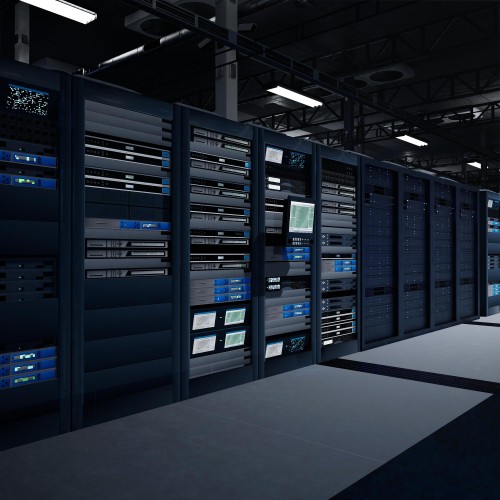
China has reclaimed the top spot in the international supercomputer rankings with the unveiling of its LineShine system, signaling a significant advancement in the nation’s domestic computing technology. Positioned at the National Supercomputing Centre in Shenzhen, the LineShine system utilizes chips developed within China and has overtaken the previous leading system from the United States. Despite this achievement, experts caution that it doesn’t necessarily indicate China has surpassed the U.S. in the realm of artificial intelligence capabilities.
The traditional metrics used to rank supercomputers primarily assess their ability to handle scientific computing tasks. However, these rankings do not fully capture the performance of systems optimized for modern artificial intelligence workloads. Many of the most capable AI systems globally are engineered by major technology firms, which often do not participate in these specific rankings. Advanced AI computing today is largely reliant on specialized chips and expansive data center infrastructures, areas where traditional supercomputer assessments may not reflect true capabilities.
China’s leap to the forefront of the supercomputer list underscores its ongoing efforts to bolster self-reliance in chip design and computing technology. Nonetheless, the nation continues to face hurdles due to restrictions on acquiring advanced AI chips, which are crucial for further developing its AI sector. This limitation presents a significant challenge in China’s pursuit of advancing its artificial intelligence prowess.
The rivalry between China and the United States in the field of advanced computing is intensifying, with both nations making substantial investments in artificial intelligence, quantum technology, and next-generation computing systems. While China’s progress is noteworthy, experts suggest that the competition in AI and computing technology is far from over, with both countries striving for dominance in these critical areas.