
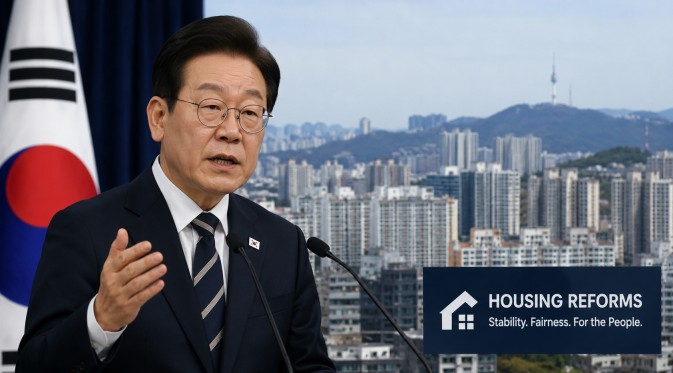
In a bold move aimed at preventing economic stagnation, South Korean President Lee Jae Myung has vowed to push forward with extensive housing reforms despite the risk of political fallout. Addressing a policy forum, Lee highlighted the dangers of a potential property bubble, suggesting it could trigger a prolonged economic downturn akin to Japan’s experience following its own real estate collapse. To counteract this, the government is considering a combination of increased property holding taxes, adjusted capital gains taxes, and stricter mortgage lending regulations in a bid to curb speculative activity and stabilize the housing market.
President Lee emphasized the need for a strategic approach, proposing measures that would shield single-home owners, low-income families, and those living outside the capital region from the brunt of the changes. Conversely, the administration intends to impose heavier tax responsibilities on individuals with multiple properties and those holding high-value speculative real estate. Furthermore, Lee is advocating for more rigorous controls on rental-deposit loans, though he noted there would be exceptions for vulnerable groups such as young people and newlyweds.
The president underscored that while these reforms may be difficult, they are essential for the nation’s long-term economic stability. He acknowledged that the government must be prepared to endure political repercussions to avert a larger economic crisis. The proposed measures reflect a focused effort to balance the need for market stabilization with social equity, ensuring that the most economically vulnerable are protected while addressing speculative excesses.
As the government gears up to introduce a comprehensive real estate policy package later this month or in early August, President Lee’s administration is preparing to navigate the complex interplay of economic reform and political strategy. The forthcoming policy details are expected to clarify the government’s approach to achieving a sustainable and equitable housing market, setting the stage for South Korea to avoid the pitfalls experienced by other nations in the wake of unchecked property speculation.