
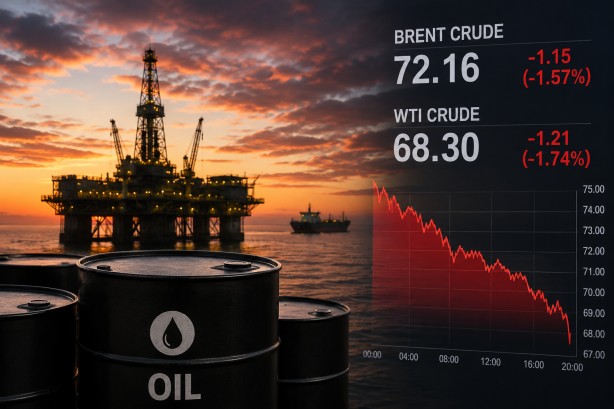
On Thursday, oil prices saw a slight dip as investors took profits and evaluated the repercussions of escalating tensions between the United States and Iran. Brent crude experienced a decline of 0.52%, settling at $84.51 per barrel, while US West Texas Intermediate crude decreased by 0.29% to $79.37 per barrel. Despite these declines, both benchmarks remained near their highest levels in a month, following a continuation of recent upward trends.
The market’s outlook has been heavily influenced by apprehensions about potential supply disruptions, spurred by a fresh series of US military strikes targeting Iranian sites and subsequent threats from Tehran to limit energy exports in the region. A particular point of concern for traders is the Strait of Hormuz, a vital corridor for global oil and liquefied natural gas shipments. Reports indicate that shipping traffic in this strategic waterway has lessened amid the latest conflict escalation.
Analysts have highlighted that the ongoing geopolitical tensions are a factor in sustaining elevated oil prices. However, they emphasize that investors are vigilantly observing the situation to determine if these conflicts will lead to significant interruptions in energy supplies. The security of another critical passage, the Bab el-Mandeb Strait, is also under scrutiny as fears grow that regional allies might become embroiled in the conflict.
In the context of these developments, some analysts are cautioning that if the situation worsens and export disruptions persist, oil prices could continue to climb. Conversely, a potential de-escalation of hostilities might result in a decrease in prices later in the year. As the situation unfolds, the market remains sensitive to any signs of change in the geopolitical landscape and its implications for energy supply routes.