
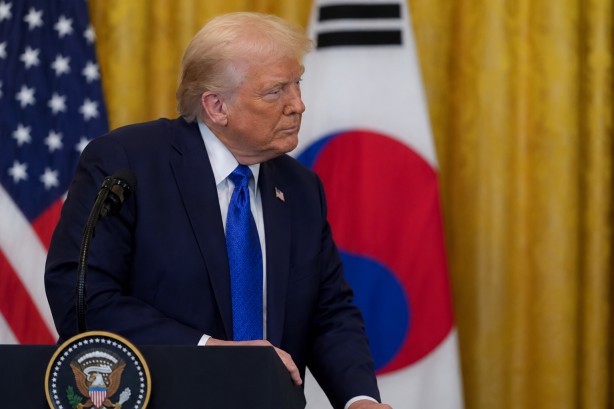
In a move that could reshape the future of the U.S. Navy, President Donald Trump has opened the door for South Korean shipbuilders to participate in the modernization and expansion of the U.S. naval fleet. Speaking at the Pennsylvania Defense and Innovation Summit, Trump underscored the need to rejuvenate America’s aging naval assets and broached the possibility of acquiring ships built in foreign nations. He specifically mentioned the potential for enhanced collaboration with South Korean companies, signaling a willingness to consider shipbuilding partnerships beyond U.S. shores.
Central to these discussions is a plan to construct two National Security Multi-Mission Vessels at the Hanwha Philly Shipyard in Philadelphia, a project estimated to cost around $1.5 billion. This initiative is part of a broader context of strengthening defense ties between the U.S. and South Korea. The cooperation was further highlighted when South Korean President Lee Jae Myung disclosed that Trump had inquired about South Korea’s capability to swiftly build 10 naval vessels for the U.S., a topic that was explored during their recent international meetings.
The U.S. Department of Defense and the Navy have been actively seeking input from leading South Korean shipbuilders, such as HD Hyundai Heavy Industries and Hanwha Ocean, to evaluate their expertise in designing and constructing military ships. Notably, Hanwha is strategically poised to capitalize on this evolving partnership. The company acquired shipyard facilities in Philadelphia in 2024 and is actively pursuing licenses to manufacture military vessels within the United States. Additionally, HD Hyundai and Samsung Heavy Industries have been broadening their collaboration with American firms to gain a foothold in the U.S. naval shipbuilding sector.
While the prospect of international cooperation in shipbuilding is promising, it faces significant hurdles due to existing U.S. regulations. Current laws restrict the construction of Navy vessels outside the country, meaning any production involving foreign shipbuilders would necessitate legislative changes or special exemptions. Despite these legal challenges, the dialogue reflects a growing interest in leveraging international partnerships to address the strategic needs of the U.S. Navy.