
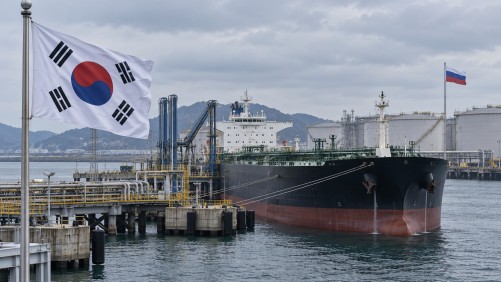
South Korea is considering legal action following reports that significant volumes of refined petroleum, notably diesel, were shipped from its ports to Russia, potentially in violation of domestic laws. This development arises amid concerns that fuel shipments during July and August could have breached international sanctions targeting Russia.
An investigation into port records and ship-tracking data revealed that over 176,000 tonnes of fuel were loaded onto seven tankers across several South Korean ports. These vessels undertook 14 journeys to Russia’s Far East, with three of them already under sanctions by the United Kingdom and the European Union. The South Korean government is scrutinizing these shipments, although it maintains that the petroleum products involved are not restricted under its export controls on Russia, which primarily focus on industrial machinery, electronics, and vehicles.
Authorities are closely examining the routes and declared destinations of these tankers to identify any discrepancies or legal violations. Notably, the three sanctioned vessels had initially declared destinations such as Japan or Singapore before ultimately docking in Vladivostok, Russia. The investigation aims to determine whether false declarations were made.
These shipments have sparked concern in Ukraine, which fears that such fuel trades might weaken the effectiveness of international sanctions imposed on Russia. South Korea, however, has dismissed Ukraine’s criticism, labeling recent comments on the shipments as both inaccurate and inappropriate. Despite tensions, South Korea has expressed hope for a resolution through diplomatic discussions, even as it recalls its ambassador to Ukraine in response to the escalating situation.
The South Korean government remains in the process of reviewing additional information related to these shipments and has emphasized its commitment to resolving any legal issues that may arise from the investigation. Meanwhile, Ukraine has sought clarification from Seoul through diplomatic channels, highlighting the international scrutiny over these fuel transactions.