
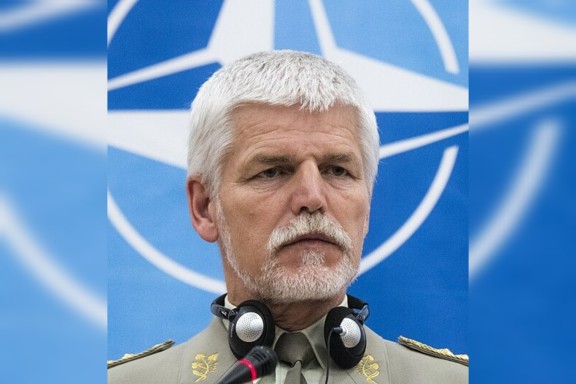
In a call for stronger measures against Russian actions, Czech President Petr Pavel has advocated for a more robust Nato response to the provocations occurring near the alliance’s eastern borders. Pavel, who formerly served as the chair of Nato’s military committee and is a retired general, emphasized that Russia’s tactics have been intentionally probing Nato’s boundaries through various military provocations, including airspace violations and drone incidents. These actions, according to Pavel, are strategically designed to remain just below the threshold that would activate Article 5, Nato’s collective defense clause.
Pavel believes that Nato’s current responses are insufficient and risk encouraging Moscow to further escalate its activities. He has proposed that Nato adopt more “decisive” actions, such as potentially shooting down any aircraft that breach allied airspace. Additionally, Pavel suggested considering asymmetric tactics, such as disrupting Russian internet systems, targeting satellite capabilities, or imposing stricter limitations on Russian banks within international financial networks. He stressed that Russia tends to respond more effectively to demonstrations of power than to diplomatic warnings.
The Czech president also highlighted the importance of intensifying sanctions against Russia and urged Western nations to condition any easing of these sanctions on the achievement of a ceasefire and progress in peace negotiations concerning Ukraine. Pavel criticized the current European strategy, which he perceives as overly reliant on U.S. leadership, and called for Europe to develop its own long-term security strategy with a more proactive role in determining its future security arrangements.
Pavel’s remarks come at a time of heightened concern within Nato about regional security, exacerbated by the ongoing tensions linked to the conflict in Ukraine. His statements reflect a growing sentiment among some Nato members that the alliance needs to reassess its approach towards Russia to prevent further destabilization in Eastern Europe and the Baltic region.