
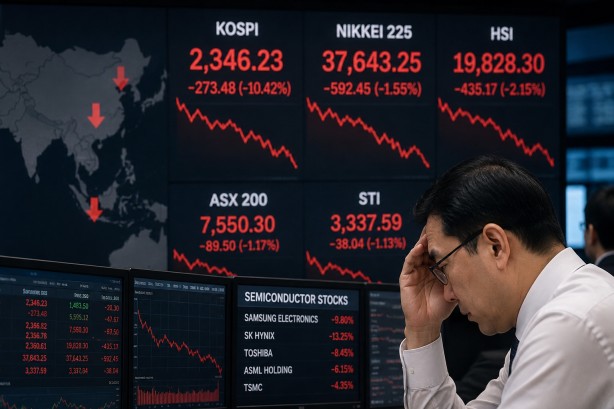
Asian stock markets witnessed a downturn on Tuesday, with South Korea’s market experiencing a particularly steep decline. The Kospi index in South Korea nosedived by over 10%, primarily due to significant losses in semiconductor stocks. The shares of tech giants Samsung Electronics and SK Hynix suffered declines of around 12%. This drop was fueled by investor anxiety over intensified competition from emerging Chinese AI startups and chipmakers, which could potentially hinder the growth trajectory of the global artificial intelligence sector.
In addition to South Korea, other major Asian markets also closed in negative territory. Japan’s Nikkei, Taiwan’s Taiex, Hong Kong’s Hang Seng, and China’s Shanghai Composite were among the indices that registered losses. Despite the overall regional downturn, Australia’s S&P/ASX 200 stood out as the only major index in the area to post gains, offering a glimmer of positivity amid a sea of red.
The semiconductor industry, a vital component of tech-driven economies, is currently facing uncertainties as new entrants from China strive to capture market share. This competitive pressure has led to increased volatility in the stock prices of established players like Samsung and SK Hynix, contributing to the broader market turbulence observed across Asia.
Meanwhile, in the commodities sector, oil prices took a dip as diplomatic tensions between the United States and Iran showed signs of easing. This development has sparked hopes for renewed dialogue between the two nations, alleviating some fears regarding disruptions in global energy supplies. The prospect of improved relations has, for now, helped temper concerns in the oil market, which has been sensitive to geopolitical tensions.