
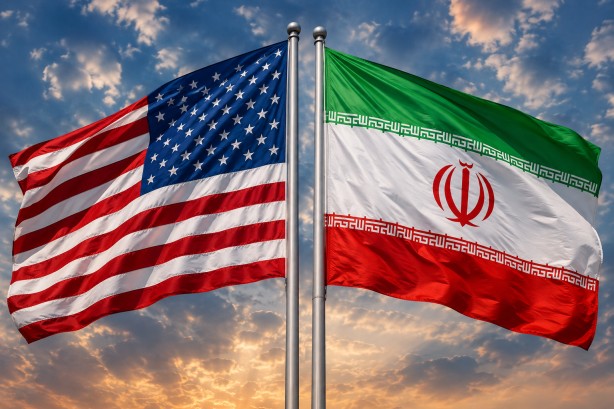
The fragile ceasefire agreement between the United States and Iran is under severe strain following a series of intense military exchanges. The U.S. recently carried out a significant airstrike operation targeting approximately 80 Iranian military sites. Officials justified the action as necessary to safeguard navigation freedom in the Strait of Hormuz, after Iran allegedly attacked three commercial vessels in this crucial waterway.
Iran retaliated by launching missiles and deploying drones against U.S. military bases in Bahrain and Kuwait. Additionally, Iranian authorities declared a revised military doctrine, announcing that both the United States and its regional allies would be viewed as equivalent adversaries in any forthcoming conflicts.
President Donald Trump responded to the escalation by asserting that the U.S. was ready to engage in further military actions if Iran persisted with its aggressive maneuvers. Nevertheless, Trump expressed optimism that the situation would not evolve into an extended conflict. The recent hostilities have significantly jeopardized the initial ceasefire, which was designed to facilitate discussions on Iran’s nuclear activities, possible easing of sanctions, and enduring security measures concerning the Strait of Hormuz.
The disagreement centers on Iran’s assertion of its right to oversee shipping through the Strait of Hormuz, conflicting with the U.S. stance that recent Iranian attacks violate international maritime laws, thereby justifying the U.S. military’s response. This renewed tension has also contributed to a surge in global oil prices, reflecting fears of possible disruptions to one of the world’s primary energy shipping lanes.