
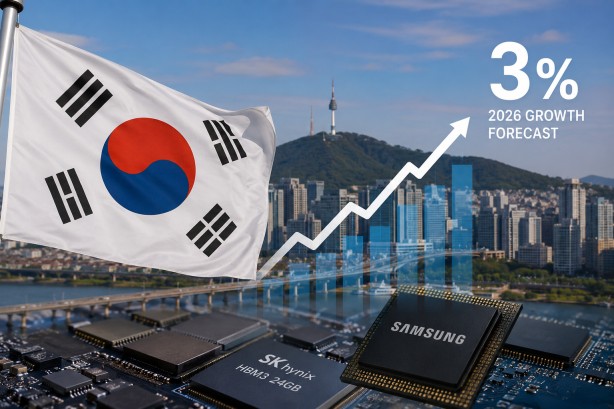
South Korea is anticipating a boost in its economic growth by 2026, revising its forecast from 2% to 3% due to a surge in semiconductor demand and a strong export performance. This positive outlook is rooted in the government’s expectation that exports will grow by 40% this year, with the nation’s current account surplus potentially reaching an unprecedented $290 billion. The surge is largely attributed to a thriving semiconductor market.
In a bid to ensure sustained economic progress, the South Korean government has introduced the “3-4-5 Vision.” This ambitious plan aims to elevate the country’s potential growth rate to 3%, position South Korea among the top four global exporters, and boost the per capita gross national income to $50,000. The initiative is designed to foster long-term growth and solidify the country’s position in the global market.
A key component of this strategy involves a substantial investment of 800 trillion won directed towards expanding the semiconductor manufacturing sector. This investment will be complemented by significant spending on artificial intelligence infrastructure, advanced chip packaging, and industrial AI applications. The bulk of these funds is expected to be sourced from the private sector, with the government providing support through infrastructure development, research initiatives, financing, and regulatory reforms.
Furthermore, South Korea is focused on attracting highly skilled foreign professionals to bolster its workforce. The country plans to enhance supply chain resilience and establish a Future Response Fund dedicated to investments in next-generation industries, education, and regional development. These measures are intended to ensure that the current semiconductor boom translates into sustainable economic growth for the nation in the long run.